
Hydropower asset renewal and climate resilience
Renewing hydropower assets for a changing climate
A structured asset-renewal programme can extend service life, strengthen dam safety and improve the operational and economic performance of existing hydropower schemes.
Many hydropower plants and dams have operated reliably for several decades. However, the conditions under which they must now perform are changing. Civil structures and electromechanical equipment are ageing, safety requirements are evolving, and operators must respond to greater hydrological variability, more frequent extreme events and new demands from increasingly complex power systems.
Asset renewal should therefore not be limited to replacing ageing equipment on a like-for-like basis. It requires an integrated assessment of safety, condition, performance, climate resilience and economic value across the complete scheme.
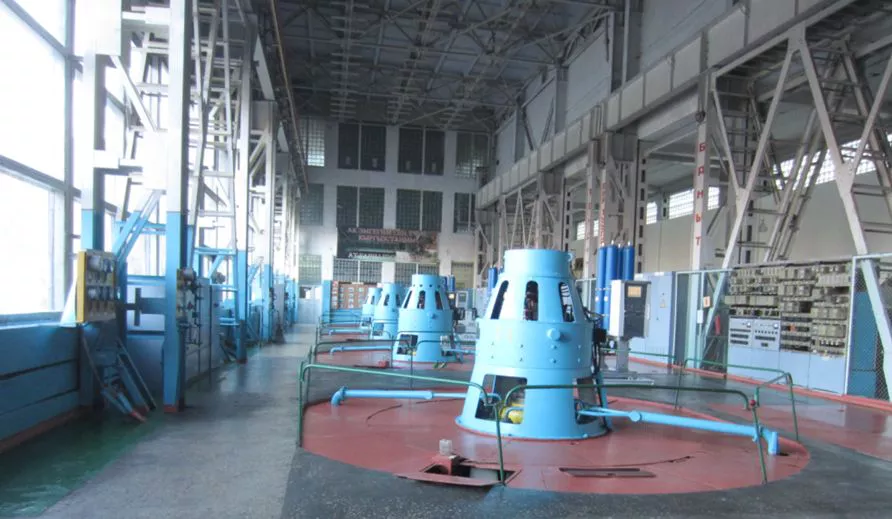
The refurbishment of At-Bashi power plant in Kyrgyzstan.
Portfolio-level screening of existing assets
For owners operating several dams or hydropower plants, the first step is to establish a consistent overview of the portfolio.
A portfolio screening assesses each asset against common criteria, including:
- dam-safety risk and downstream consequences;
- structural and equipment condition;
- exposure to floods, droughts, seismic hazards and other climate-related risks;
- operating performance and availability;
- maintenance requirements and unplanned outages;
- regulatory compliance; and
- the potential value of rehabilitation or optimisation.
The objective is not to complete a detailed assessment of every structure and system immediately. It is to identify critical risks, data gaps, short-term interventions and assets requiring more detailed investigation. This provides owners with a transparent basis for allocating technical and financial resources.
Asset-condition and remaining-life assessments
Rehabilitation master planning
The chronological age of an asset does not, by itself, determine whether it requires replacement. Its condition depends on design, construction quality, operating history, maintenance, loading and environmental exposure.
A remaining-life assessment combines:
- inspections and material testing;
- instrumentation and surveillance data;
- equipment diagnostics;
- maintenance and incident records;
- structural and mechanical analyses;
- operational performance data; and
- assessments of obsolescence and spare-part availability.
The review should cover the complete system, including civil structures, hydro-mechanical equipment, turbines and generators, electrical systems, control and protection equipment, auxiliary systems and transmission interfaces.
The resulting condition assessment distinguishes components that can remain in service from those requiring repair, strengthening, refurbishment or replacement. It also identifies where additional monitoring is needed before an investment decision can be made.
Individual interventions should be brought together within a coordinated rehabilitation master plan.
The plan defines:
- the technical scope and priority of each intervention;
- dependencies between civil, mechanical and electrical works;
- required investigations and design activities;
- operational outages and construction sequencing;
- permitting and environmental requirements;
- procurement and contracting strategies;
- preliminary costs and schedules; and
- principal implementation risks.
This approach avoids isolated interventions that may resolve one problem while creating constraints elsewhere. It also allows owners to combine urgent safety measures, planned maintenance and longer-term performance improvements within a coherent investment programme.
Dam-safety and climate-risk assessments
Dam safety remains the primary consideration throughout the operating life of a hydropower scheme. Assessments must consider whether the original design assumptions remain valid and whether the asset can safely accommodate current and future loading conditions.
This may require reassessment of:
- extreme floods and spillway capacity;
- seismic hazards;
- dam and foundation behaviour;
- slope stability and reservoir-induced hazards;
- sedimentation and reservoir capacity;
- ageing of gates, valves and outlet structures;
- downstream consequences; and
- emergency preparedness and warning arrangements.
Climate change adds uncertainty to historical hydrological records. Changes in rainfall patterns, snow and glacier melt, drought duration and extreme flood events can affect both dam safety and electricity production. Climate-risk assessments should therefore consider a range of plausible future conditions rather than relying exclusively on past observations.
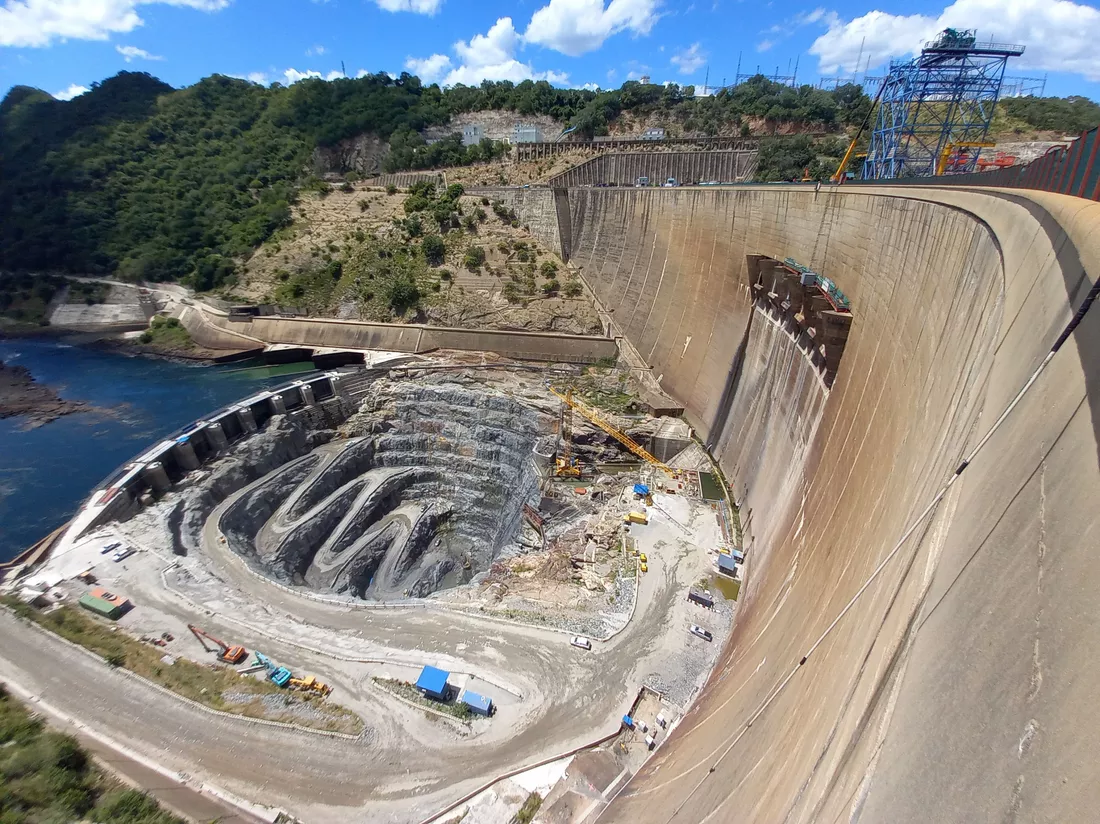
Kariba Dam Rehabilitation Project
Detailed upgrade design
Implementation and supervision
Long-term monitoring and operational optimisation
Rehabilitation design differs from greenfield design because new systems must be integrated into existing structures and operating installations, often with incomplete historical information.
Detailed design must therefore address:
- interfaces between existing and new equipment;
- temporary works and construction access;
- continued plant operation during implementation;
- outage limitations;
- structural modifications;
- compatibility with existing control systems;
- installation tolerances; and
- testing and commissioning requirements.
Digital engineering and Building Information Modelling can support this process by consolidating survey data, existing drawings and proposed modifications within a coordinated model. This improves interface management, facilitates construction planning and reduces the risk of clashes or unforeseen modifications during implementation.
Rehabilitation works are frequently undertaken while parts of the hydropower scheme remain operational. This creates demanding interfaces between contractors, operators, designers and equipment suppliers.
Effective implementation requires:
- detailed procurement documentation;
- clear allocation of technical and contractual risks;
- review of contractor designs and method statements;
- quality assurance and factory inspections;
- site supervision;
- coordination of outages and operational constraints;
- health and safety management;
- progress, cost and risk control; and
- structured testing and commissioning.
Independent engineering supervision helps ensure that the completed works meet the required safety, quality and performance criteria and that all interfaces are properly tested before the asset returns to full operation.
Asset renewal does not end at commissioning. Long-term performance depends on effective surveillance, maintenance and operational decision-making.
Modern monitoring systems can integrate instrumentation, inspection findings, operational data and environmental observations. The information should be assessed against defined thresholds, engineering models and expected behaviour to identify anomalies at an early stage.
A long-term dam-safety programme should include:
- routine surveillance and visual inspections;
- automated instrumentation and data validation;
- periodic dam-safety reviews;
- reassessment following exceptional events;
- emergency preparedness planning;
- maintenance and testing of safety-critical systems; and
- clear escalation and decision-making procedures.
Operational optimisation can complement the safety programme. Advanced inflow forecasting, including solutions such as Tethys, can improve reservoir planning, flood management, maintenance scheduling and the coordination of hydropower with variable renewable generation. Better forecasting does not replace engineering judgement, but it provides operators with improved information for managing uncertainty and making timely operational decisions.
An integrated approach to asset renewal
Hydropower asset renewal is most effective when safety, engineering, operations and economics are considered together. Portfolio screening identifies priorities, detailed assessments establish the technical requirements, and master planning converts those requirements into an implementable investment programme.
Gruner supports hydropower owners throughout this process, from portfolio assessment and dam-safety review to rehabilitation design, implementation supervision, long-term monitoring and operational optimisation. The objective is to extend the safe and productive life of existing assets while preparing them for changing climatic, regulatory and power-system conditions.