
September 2, 2026
LSVA III: Completion of the first new stationary recording systems
Since the beginning of 2026, the new generation of LSVA recording systems has been progressively rolled out across Switzerland. The systems record journey data from heavy goods vehicles and help ensure that the heavy vehicle charge is calculated correctly. Gruner is planning and implementing several recording sites, making an important contribution to the rollout of the new infrastructure.
The LSVA is taking its next technological step. The performance-related heavy vehicle charge (LSVA) is one of Switzerland’s key instruments for financing transport infrastructure. According to the Federal Office for Customs and Border Security (FOCBS), total annual revenue from the heavy vehicle charge amounts to approximately CHF 1.6 billion. With the introduction of LSVA III, Switzerland is transitioning to a satellite-based recording system and aligning it with international standards.
Gruner is planning 74 recording sites for LSVA III
The project includes the conversion of twelve existing recording systems as well as the construction of 25 new systems on national roads and 37 on cantonal roads. On behalf of the Federal Office for Customs and Border Security (FOCBS) and general contractor Kapsch TrafficCom AG, Gruner is responsible at several sites for site selection, civil engineering design, submission of building applications, securing the necessary easements, and construction supervision during implementation.
“LSVA III is a national infrastructure project. Close collaboration between several Business Units enables us to bring together expertise from different disciplines, plan the sites from a single source and support them through to construction,” says Reto Weidmann, Overall Project Manager and Branch Manager at Gruner in Brugg.
The first systems are now successfully in operation, marking an important milestone in the rollout of LSVA III. “Implementing the recording systems requires careful coordination, particularly from an organisational perspective. Many of the sites are located at traffic-sensitive points within the existing road network, where a range of technical, operational and legal requirements come together,” Weidmann continues. “At the same time, authorities, landowners, utility operators, construction companies and specialist planners need to be involved at an early stage and their respective interests coordinated.”
How does the LSVA III satellite-based system work?
The distances travelled by heavy goods vehicles are recorded using Global Navigation Satellite Systems (GNSS) and transmitted to the Federal Office for Customs and Border Security via authorised service providers. The new recording systems register vehicles as they pass and cross-check this information against the reported journey data.
As part of the introduction of LSVA III, the FOCBS is expanding the existing recording network across Switzerland. In addition to new systems, existing sites are being modernised and integrated into the new system. The first recording systems have been in operation since the beginning of 2026. The network on national and cantonal roads will continue to be expanded in stages.
Would you like to learn more about our road and infrastructure services? Discover how Gruner takes an integrated approach to planning and delivering infrastructure projects.
From strategic planning and integrated project design through to asset preservation.
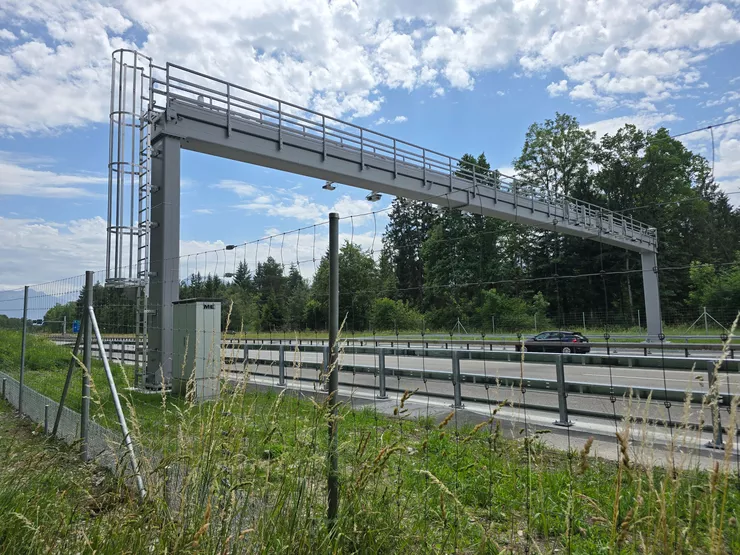
New LSVA recording systems on national and cantonal roads