
May 13, 2026
Our Climate Adaptation Audit: Making Existing Projects Fit for Climate Reality
Many infrastructure projects are being implemented today based on plans developed years ago. The challenge is that the requirements for climate-adapted construction have evolved significantly in the meantime. With its Climate Adaptation Audit, Gruner identifies opportunities to adapt existing projects to current and future climate challenges.
Whether in the preliminary design phase, detailed planning stage, or shortly before implementation, the Climate Adaptation Audit can be applied at any stage of a project. Gruner’s specialists assess projects with a focus on microclimate, heat mitigation, water management, and ecological enhancement.
The findings are summarized in a concise report highlighting where relatively simple measures can generate additional benefits. Examples include greening initiatives, soil de-sealing, or reducing heat-retaining surfaces.
Small Adjustments, Big Impact
Many projects were planned before climate adaptation measures became standard practice. The audit helps close this gap and supports project owners in making existing developments more climate-resilient—without extending planning timelines and with manageable effort.
A Contribution to Tomorrow’s Infrastructure
For Gruner, the Climate Adaptation Audit is an important component of its sustainability strategy. The objective is to integrate climate change considerations into today’s projects and promote solutions that remain effective in the long term.
This creates infrastructure projects that not only meet today’s requirements but are also prepared for the challenges of tomorrow.
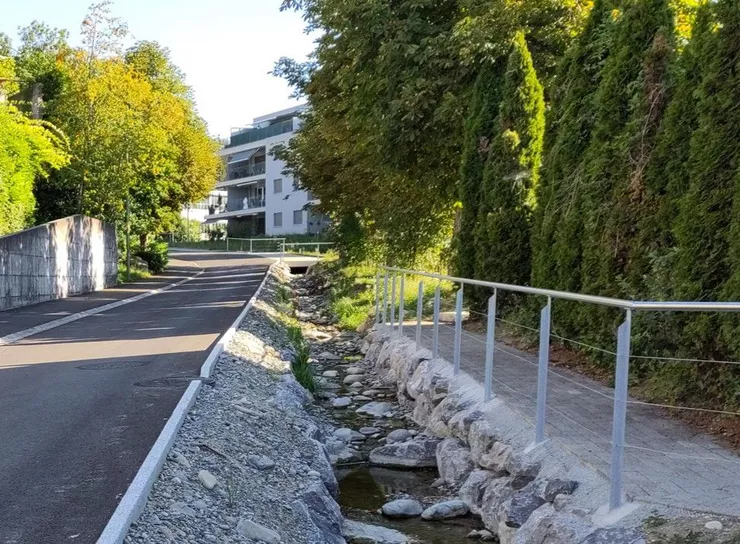
Open watercourse alongside a newly designed road with integrated pedestrian path and nature-oriented bank stabilization.
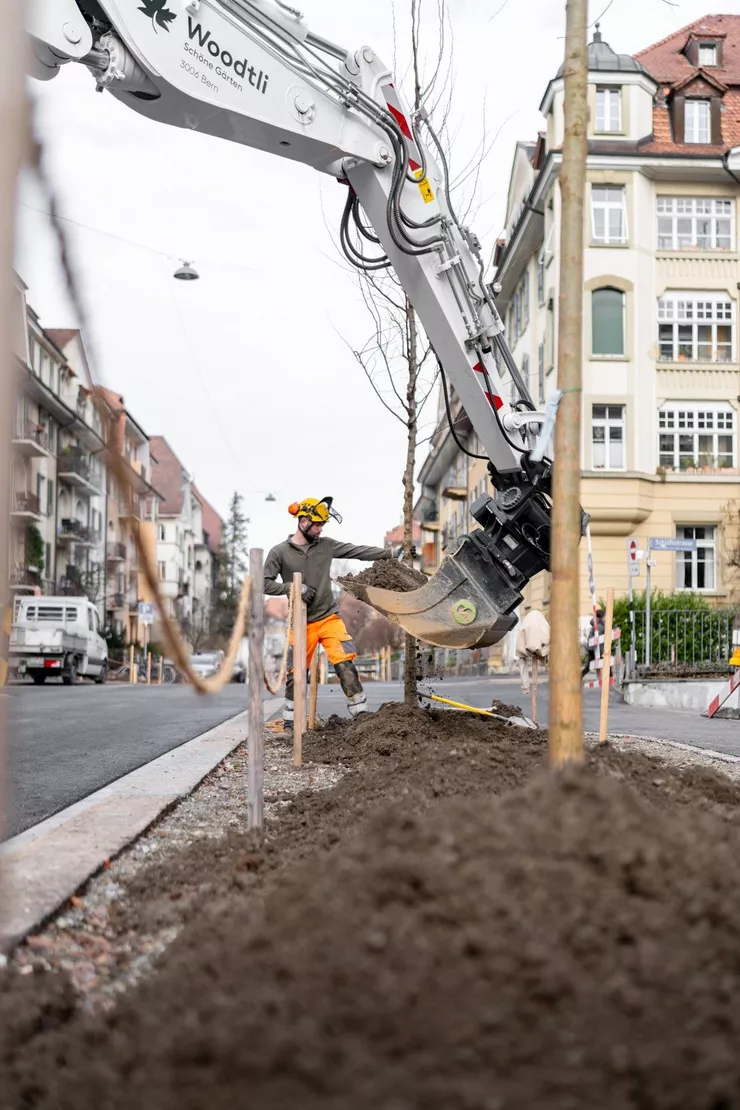
Planting of a street tree along an urban road corridor using a specialized excavator.
© dropZone